Notes: (1) Jump to synopsis of “A Taxi Driver” or “26 Years”; (2) Main characters in “A Taxi Driver” — German reporter Jurgen Hinzpeter and the Korean taxi driver — are real-life characters, although some events and details of the movie were fictionalized; (3) Jump to lessons in photography from “A Taxi Driver” and “26 Years”
MBC May 18 Democratic Uprising 40th Anniversary Documentary: Without Leaving A Name Behind, Part 1
How much do you know about the Gwangju Uprising and modern history of Korea?
Remembering the Late Jürgen Hinzpeter, Reporter of May 18
|
Backgrounders about “Gwangju Uprising”
From Wikipedia: The
Gwangju Uprising, alternatively called May 18 Democratic Uprising by UNESCO, and also known as May 18 Gwangju Democratization Movement, was a popular uprising in the city of Gwangju, South Korea, from May 18 to 27, 1980. Estimates suggest up to 606 people may have died. During this period, Gwangju citizens took up arms (by robbing local armories and police stations) when local Chonnam University students – who were demonstrating against the martial law government – were fired upon, killed, raped and beaten by government troops. The uprising ended on May 27, 1980. The event is sometimes called 5·18 (May 18), in reference to the date the movement began.
During Chun Doo-hwan’s presidency, the authorities defined the incident as a rebellion instigated by Communist sympathizers and rioters. By 1997, a national cemetery and day of commemoration (May 18), along with acts to “compensate, and restore honor” to victims, were established.
In 2011, 1980 Archives for the May 18th Democratic Uprising against Military Regime located in Gwangju city hall were inscribed on the UNESCO Memory of the World Register.
For more information, read:
Real-life heroes of “A Taxi Driver” pass away without having reunited
In South Korea, an Unsung Hero of History Gets His Due (New York Times, August 2017)
Family of Former South Korean Dictator to Pay His Fines (New York Times, September 2013)
1980: The Kwangju uprising (PDF)
Korean History: Jürgen Hinzpeter’s 1980 Documentary Film on Gwangju Massacre and 2012 S. Korean Movie “26 Years”
“A Taxi Driver” (2017)
 From Wikipedia:
A Taxi Driver is a 2017 South Korean historical action drama film directed by Jang Hoon, with Song Kang-ho starring in the title role, alongside Thomas Kretschmann. The film centers on a taxi driver from Seoul, who unintentionally becomes involved in the events of the Gwangju Democratization Movement in 1980.
The film was released on August 2, 2017, in South Korea. It was selected as the South Korean entry for the Best Foreign Language Film at the 90th Academy Awards, but it was not nominated. The film was a commercial success, and was also the second highest grossing film of 2017.
The film topped the South Korean box office for three consecutive weekends. By August 28, the film had attracted 11.4 million viewers. According to the film’s distributor Showbox, the total attendance of the film surpassed the 12 million mark as of September 9, becoming the tenth most-watched local film of all time in South Korea.
How I wrote this summary of “A Taxi Driver” with no spoilers
1. I divided this summary into nine parts. For each part, I narrated the major actions without revealing the plot’s twist and turns.
2. Part 4 is the midway point of the movie (58:38 mark); at this point, you will have gotten to know the two major characters (Kim and Peter) and the two important minor characters (Jae-sik and Hwang Tae-sool). You can read Part 1 to Part 4 to understand what the movie is all about and then watch the movie. |
Plot summary:
Part 1 (from start up to 23:36)
1980 ...
Kim Man-seob is the driver of a private taxi in Seoul; amidst the ongoing rallies on the streets by college students against martial law, he struggles financially as he raises his young daughter by himself.
In Japan, a group of journalists discuss the declaration of martial law in Korea and the reported violent crackdown on protesters by the military. Jurgen Hinzpeter (“Peter”), a German reporter, decides to go to Korea to find out what’s really happening there.
Pressured by his landlord to settle his unpaid rent, Kim manipulates his way into being hired by Peter to take him to Gwangju and then back to Seoul before the curfew.
 Part 2
(from 23:37 to 35:58)
Despite obstacles, Kim and Peter manage to get into Gwangju. On the deserted streets, they meet a group of college students who are on their way to a protest rally. Peter befriends the students, who assign Jae-sik (the only one among them who can speak English) to be his guide and translator.
Sensing that there’s danger by staying in Gwangju, Kim decides to abandon Peter; he turn his taxi around and heads back to Seoul.
Part 3 (from 35:59 to 47:18)
As Kim and the old woman search the hospital, he meets Peter and two of the students; they accuse him of running off with Peter’s film bag. Worse, he gets into a fight with several taxi drivers from Gwangju.
Part 4 (from 47:19 to 58:38)

From a rooftop, Peter and a Korean photojournalist named Choi record the scenes of violence and mayhem on the streets below as soldiers charge and beat up the protesters. Despite Kim’s pleas, Peter and Jae-sik come down from the rooftop and run into the streets. With teargas filling the air and soldiers running amuck, Peter films the bloody chaos, but a plainclothes security officer spots him.
Part 5 (from 58:39 up to 1:12:40)
Kim and Peter are unable to go back to Seoul. Together with Jae-sik, they spend the night with the family of Hwang Tae-sool, one of the Gwangju taxi drivers.
Meanwhile, Choi, the photojournalist, and a few of his fellow reporters barricade the entrance of their newspaper’s printing press and begin printing the next day’s edition with pictures of the deadly dispersal of the protesters.
Part 6 (from 1:12:41 to 1:22:01)
Kim, Peter, and Jae-sik join the people who are gathering on the street in front of the burning TV station. But as the soldiers arrive, the plainclothes security officers spot Peter.
As Kim, Peter, and Jae-sik run away, they find themselves inside an abandoned building. But Kim and Peter get cornered in an upper floor, while Jae-sik gets caught. The security officer threatens to kill Jae-sik if Peter does not surrender his camera and films.
Part 7 (from 1:22:02 to 1:34:42)
Kim and Peter escape and run back to the house of Hwang Tae-sool, the Gwangju taxi driver. As Peter later stares at his films, Kim begins reminiscing in Korean about his stay in Saudi Arabia and about his family.
The next day, Kim decides to abandon Peter and go back to Seoul. But the soldiers are already searching for his taxi.
Part 8 (from 1:34:43 to 1:50:32)
Bothered by his conscience and by the lies in the media reports about Gwangju, Kim decides to return to Gwangju. At the hospital, he finds Peter and the Gwangju taxi driver weeping. He shakes Peter out of his stupor and tells him to film everything that’s happening in the hospital.
Later, Kim and Peter venture out into the street where the soldiers have shot numerous protesters; the soldiers also shoot anyone who tries to help evacuate the wounded. Unable to contain their anger, Kim and the Gwangju taxi drivers decide to help the wounded protesters.
Part 9 (from 1:50:33 to end)
With the plainclothes security officers hot on their trail, Kim and Peter escape from Gwangju by using the back roads on the mountains. But they’re stopped at a checkpoint, and the corporal in charge finds Kim’s original Seoul license plates.
Kim rams through the checkpoint, but the plainclothes security officers catch up with them on the highway.
“26 Years”
 From Wikipedia:
“26 Years” is a 2012 South Korean film based on the popular 2006 manhwa serialized online by manhwaga Kang Full. It is the fictional story of five ordinary people (a sports shooter, a gangster, a policeman, a businessman, and head of a private security firm) who band together in order to assassinate the man responsible for the massacre of innocent civilians in Gwangju in May 1980.
The film debuted at the top of the box office, selling 1,108,714 tickets in only a single week on release. It reached 2.5 million admissions in mid-December 2012, resulting in a total of nearly 3 million in January 2013.
Plot summary:
26 years after the Gwangju Uprising ...
Kim Gap-se is the chairman of a thriving conglomerate. With his son Kim Joo-ahn, he organizes a hit squad to assassinate the former Korean president who’s the mastermind behind the massacre of the protesters in Gwangju.
The hit squad consists of persons who had relatives who were killed in the massacre: Shim Mi-jin (a member of the Olympic shooting team), Kwak Jin-bae (a Gwangju gangster), and Kwon Jung-hyuk (a rookie policeman).
The former Korean president is heavily-guarded while traveling, and his house is like a fortress that’s protected by several layers of security. Kim Gap-se and Kim Joo-ahn thus make plans to bribe someone close to the former Korean president.
While preparing for the assassination, Jin-bae finds out Kim Gap-se’s real connection to the Gwangju Uprising. Disgusted by the conflicts among the hit squad, Mi-jin walks out, with Jung-hyuk following her.
Jung-hyuk’s superior officer becomes suspicious of his activities and orders someone to keep a close watch on him.
On the day of the planned assassination, Mi-jin posts herself in a place that overlooks the house of the former Korean president. While Jin-bae leads his fellow gangsters, Kim Gap-se and Kim Joo-ahn use their inside contact to enter the house.
But Jung-hyuk’s superior officer finally learns of the planned assassination. Together with a busload of policemen, he rushes to the house of the former Korean president.
Lessons in photography from “A Taxi Driver” and “26 Years”
“A Taxi Driver”
 |
| Aerial perspective |
 |
| Background blur, focal center of attention |
 |
| Compressed perspective, lines of direction |
 |
| Conveying depth through overlappong forms |
 |
| Establishing shot |
 |
| Foreground and background blur |
 |
| Foreground and background blur |
 |
| Foreground and background blur |
 |
| High angle shot |
 |
| Linear perspective |
 |
| Linear perspective |
 |
| Low angle shot, leading lines |
 |
| Natural frames |
 |
| Reflection |
 |
| Visual balance |
“26 years”
 |
| Background blur, shallow depth of field |
 |
| Backlighting, rim lighting |
 |
| Cool colors |
 |
| Dutch angle, high angle shot |
 |
| Extreme close-up |
 |
| Foreground and background blur |
 |
| Golden hours, establishing shot |
 |
| High angle shot |
 |
| Chiaroscuro (interplay of light and shadow) |
 |
| Keystoning |
 |
| Lens flare |
 |
| Low angle shot, Dutch angle |
 |
| Low angle shot, keystoning |
 |
| Low angle shot, keystoning |
 |
| Low key lighting, off-center emphasis |
 |
| Natural frames |
 |
| Natural frame |
 |
| Foreground frame, lines of direction |
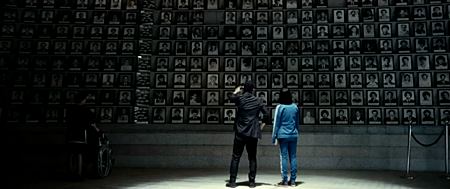 |
| Establishing shot, patterns |
 |
| Rule of thirds |
 |
| Shadows and reflections |
 |
| High angle shot, shadows |
 |
| Shallow depth of field, extreme close-up |
 |
| Shallow depth of field |
 |
| Golden hours, lens flare, silhouette |
 |
| Low angle shot, silhouette, Dutch angle |
 |
| Low angle shot, silhouette, Dutch angle |
 |
| Silhouette |
 |
| Visual balance |


 I first read about Vincent Van Gogh sometime in 1976 in the book “The Gospel According to Peanuts” written by Robert Short. Through the footnotes, I became interested in Vincent’s letters to his brother Theo. Later, in 1978 or 1979, while I was an English major in Philippine Christian University, I spent my afternoons reading Van Gogh’s biography.


